Buy powerladies.eu ?
We are moving the project
powerladies.eu .
Are you interested in purchasing the domain
powerladies.eu ?
domain@kv-gmbh.de · 0541-91531010
Buy powerladies.eu ?
What is the difference between the binomial distribution, the normal distribution, and the confidence interval?
The binomial distribution is used to model the number of successes in a fixed number of independent trials with a constant probability of success. The normal distribution is a continuous probability distribution that is symmetric and bell-shaped, commonly used to model real-valued random variables. A confidence interval is a range of values that likely contains the true value of a population parameter, such as the mean, based on sample data. The main difference between them is that the binomial distribution is discrete, the normal distribution is continuous, and the confidence interval is a statistical tool used to estimate population parameters. **
Is the normal distribution a requirement for calculating confidence intervals?
No, the normal distribution is not a requirement for calculating confidence intervals. While the normal distribution is commonly used in statistics, confidence intervals can also be calculated using other distributions, such as the t-distribution for small sample sizes. Additionally, there are non-parametric methods for calculating confidence intervals that do not rely on any specific distribution assumption. Therefore, the normal distribution is not a strict requirement for calculating confidence intervals. **

Similar search terms for Distribution
Top-Angebote
Products related to Distribution:
-
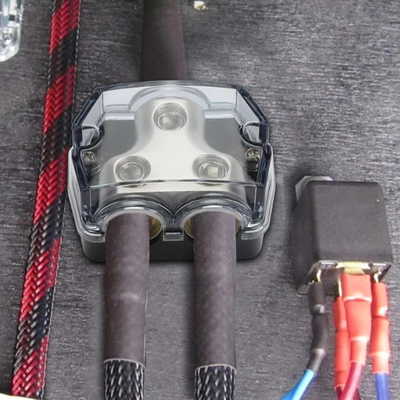
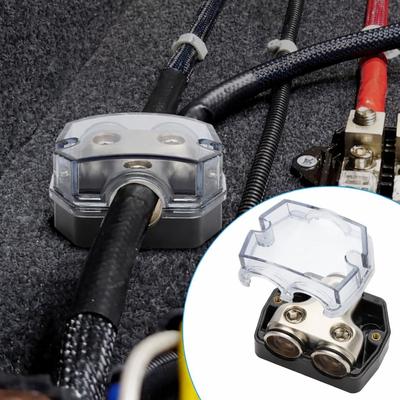
Car Audio Distribution Block Power Ground Amp Distributor Car Audio Distribution Block Power Ground Amp DistributorUpgrade your car audio system with these 2pcs Car Audio Distribution Block. Designed for maximum efficiency, this highquality distribution block offers easy wiring solutions for your car's audio or electrical equipment. With its zinc alloy...49,97 $*Shipping: 0,00 $Secure redirect to the provider
-
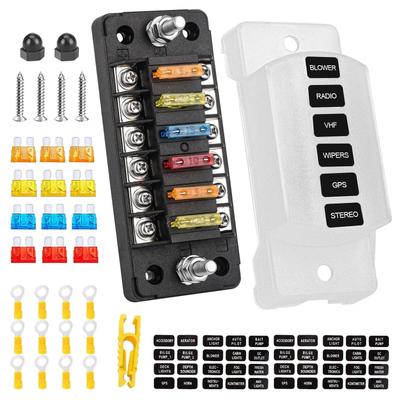
Fuse Block Kit, Power Distribution, Universal Blade Holder Fuse Block Kit, Power Distribution, Universal Blade HolderVersatile Power Distribution Solution The Universal Blade Fuse Block provides a reliable and efficient way to distribute power from a single source to multiple circuits, making it ideal for cars, boats, and RVs. Designed to manage electrical...47,97 $*Shipping: 0,00 $Secure redirect to the provider
-
Radius Electrofusion Gas Distribution Valve 32mmDonkin MDPE (PE 80) electrofusion fittings, for use with MDPE (PE80) gas pipe, is manufactured to the requirements of B.G Transco Technical Standard PL2 - Part 4. Electrofusion fittings are supplied in individual sealed bags to avoid contamination of the joint surfaces prior to jointing.79,02 £*Shipping: 0,00 £Secure redirect to the provider
-
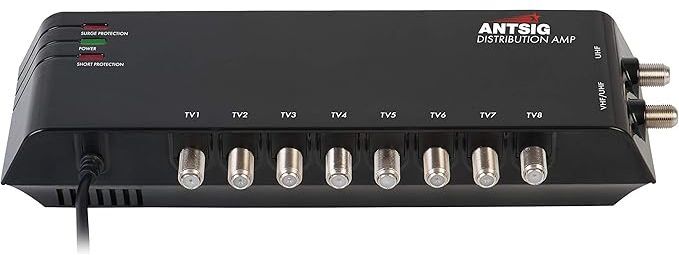
Antsig Distribution Amplifier 8 Way, NewEnsure crystal-clear signal strength across multiple devices with the Antsig Distribution Amplifier 8 Way — a reliable and high-performance solution for distributing digital TV, FM, or DAB signals to multiple TVs or tuners in your home or commercial setup. This amplifier is designed to boost signal strength and maintain picture and sound quality, especially in areas with weak reception. Whether you're connecting TVs in different rooms or setting up a home entertainment system, Antsig delivers superior signal stability and wide coverage, making it the perfect choice for seamless media enjoyment. 🔶 ( 8-Way Signal Distribution ) – Distributes amplified signal to up to 8 different TVs or devices without signal loss. 🔶 ( High Gain Amplification ) – Enhances weak signals, improving clarity and reception across all connected devices. 🔶 ( Digital TV, FM & DAB Compatible ) – Supports a wide range of signals for versatile use in your entertainment setup. 🔶 ( Easy Plug-and-Play Installation ) – Simple setup with no complex configuration needed; ready to go out of the box. 🔶 ( Low Noise Output ) – Delivers a clean, interference-free signal for superior audio and video performance. 🔶 ( Compact & Durable Design ) – Space-saving design fits easily into any setup and built with long-lasting components. 🔶 ( Ideal for Homes & Commercial Spaces ) – Perfect for large households, offices, apartments, and hotels. 🔶 ( Power Supply Included ) – Comes complete with its own power adapter for uninterrupted performance. 🔶 ( Stable Signal Across All Ports ) – Ensures consistent signal strength across all 8 outputs. 🔶 ( Wall-Mountable Option ) – Flexible installation with optional wall mounting for better space management. The Antsig Distribution Amplifier 8 Way is the ultimate solution for homes or businesses needing consistent, high-quality signal distribution across multiple screens. Say goodbye to signal dropouts and enjoy uninterrupted entertainment with strong, stable performance in every room. Ideal for digital TV installations, this amplifier ensures you get the best possible viewing and listening experience from all your connected devices.24,99 £*Shipping: 0,00 £Secure redirect to the provider

-
Is the normal distribution a prerequisite for calculating confidence intervals?
No, the normal distribution is not a prerequisite for calculating confidence intervals. While the normal distribution is commonly used in calculating confidence intervals, there are other methods available for non-normally distributed data, such as the t-distribution for small sample sizes. Additionally, for large sample sizes, the Central Limit Theorem states that the sampling distribution of the sample mean will be approximately normally distributed regardless of the distribution of the population. **
-
Which distribution form is more commonly encountered: normal distribution or skewed distribution?
The normal distribution is more commonly encountered in real-world data compared to skewed distributions. This is because many natural phenomena and human characteristics tend to follow a normal distribution, such as heights, weights, test scores, and IQ scores. Skewed distributions, on the other hand, are less common but still appear in certain types of data, such as income distribution, where a large number of people have lower incomes and a smaller number have very high incomes, resulting in a right-skewed distribution. **
-
How do you calculate a confidence interval for a normal distribution?
To calculate a confidence interval for a normal distribution, you need to know the mean and standard deviation of the distribution. First, determine the level of confidence you want for the interval, typically 95% or 99%. Then, use the formula: Confidence interval = mean ± (z * (standard deviation / √n)) Where z is the z-score corresponding to the desired level of confidence, standard deviation is the population standard deviation, and n is the sample size. Finally, calculate the lower and upper bounds of the confidence interval using the formula. **
-
Which distribution box?
The distribution box is typically a metal or plastic enclosure that houses electrical connections and circuit breakers for distributing power to different areas of a building. It is usually located near the main electrical panel and serves as a central point for routing electricity to various circuits throughout the building. The distribution box is essential for ensuring that electricity is safely and efficiently distributed to different areas, helping to prevent overloads and electrical hazards. **


How is the distribution function created in a uniform distribution?
In a uniform distribution, the distribution function is created by assigning equal probability to all possible outcomes within a specified range. This means that each value within the range has an equal likelihood of occurring. The distribution function is a constant value over the range, reflecting the uniformity of probabilities. This type of distribution is often used when all outcomes are equally likely, such as in the rolling of a fair six-sided die. **
What is the difference between frequency distribution and probability distribution?
Frequency distribution is a table or graph that shows the number of times a particular value or range of values occurs in a dataset. It represents the frequency or count of each value. On the other hand, a probability distribution is a mathematical function that provides the probabilities of occurrence of different possible outcomes in a sample space. It represents the likelihood of each value occurring. In summary, frequency distribution deals with the count of occurrences, while probability distribution deals with the likelihood of occurrences. **
Top-Angebote
Products related to Distribution:
-
Car Audio Amp Power Ground Distribution Block Car Audio Amp Power Ground Distribution BlockUpgrade your car audio setup with these 2Pieces 2Way Car Audio Amp Power Ground Distribution Block, designed for highperformance electrical systems. Perfect for audiophiles and car enthusiasts, this power ground distributor simplifies wiring,...54,97 $*Shipping: 0,00 $Secure redirect to the provider
-
Espresso WDT Distribution Tool pinkAchieve professionallevel extraction with the Espresso WDT Distribution Tool. This highprecision coffee needle stirrer is meticulously engineered to declump coffee grounds and ensure an even distribution within your portafilter. Featuring an...124,97 $*Shipping: 0,00 $Secure redirect to the provider
-
Car Audio Distribution Block Power Ground Amp Distributor Car Audio Distribution Block Power Ground Amp DistributorUpgrade your car audio system with these 2pcs Car Audio Distribution Block. Designed for maximum efficiency, this highquality distribution block offers easy wiring solutions for your car's audio or electrical equipment. With its zinc alloy...49,97 $*Shipping: 0,00 $Secure redirect to the provider
-
Fuse Block Kit, Power Distribution, Universal Blade Holder Fuse Block Kit, Power Distribution, Universal Blade HolderVersatile Power Distribution Solution The Universal Blade Fuse Block provides a reliable and efficient way to distribute power from a single source to multiple circuits, making it ideal for cars, boats, and RVs. Designed to manage electrical...47,97 $*Shipping: 0,00 $Secure redirect to the provider
-
What is the difference between the binomial distribution, the normal distribution, and the confidence interval?
The binomial distribution is used to model the number of successes in a fixed number of independent trials with a constant probability of success. The normal distribution is a continuous probability distribution that is symmetric and bell-shaped, commonly used to model real-valued random variables. A confidence interval is a range of values that likely contains the true value of a population parameter, such as the mean, based on sample data. The main difference between them is that the binomial distribution is discrete, the normal distribution is continuous, and the confidence interval is a statistical tool used to estimate population parameters. **
-
Is the normal distribution a requirement for calculating confidence intervals?
No, the normal distribution is not a requirement for calculating confidence intervals. While the normal distribution is commonly used in statistics, confidence intervals can also be calculated using other distributions, such as the t-distribution for small sample sizes. Additionally, there are non-parametric methods for calculating confidence intervals that do not rely on any specific distribution assumption. Therefore, the normal distribution is not a strict requirement for calculating confidence intervals. **
-
Is the normal distribution a prerequisite for calculating confidence intervals?
No, the normal distribution is not a prerequisite for calculating confidence intervals. While the normal distribution is commonly used in calculating confidence intervals, there are other methods available for non-normally distributed data, such as the t-distribution for small sample sizes. Additionally, for large sample sizes, the Central Limit Theorem states that the sampling distribution of the sample mean will be approximately normally distributed regardless of the distribution of the population. **
-
Which distribution form is more commonly encountered: normal distribution or skewed distribution?
The normal distribution is more commonly encountered in real-world data compared to skewed distributions. This is because many natural phenomena and human characteristics tend to follow a normal distribution, such as heights, weights, test scores, and IQ scores. Skewed distributions, on the other hand, are less common but still appear in certain types of data, such as income distribution, where a large number of people have lower incomes and a smaller number have very high incomes, resulting in a right-skewed distribution. **
Similar search terms for Distribution
-
Radius Electrofusion Gas Distribution Valve 32mmDonkin MDPE (PE 80) electrofusion fittings, for use with MDPE (PE80) gas pipe, is manufactured to the requirements of B.G Transco Technical Standard PL2 - Part 4. Electrofusion fittings are supplied in individual sealed bags to avoid contamination of the joint surfaces prior to jointing.79,02 £*Shipping: 0,00 £Secure redirect to the provider
-
Antsig Distribution Amplifier 8 Way, NewEnsure crystal-clear signal strength across multiple devices with the Antsig Distribution Amplifier 8 Way — a reliable and high-performance solution for distributing digital TV, FM, or DAB signals to multiple TVs or tuners in your home or commercial setup. This amplifier is designed to boost signal strength and maintain picture and sound quality, especially in areas with weak reception. Whether you're connecting TVs in different rooms or setting up a home entertainment system, Antsig delivers superior signal stability and wide coverage, making it the perfect choice for seamless media enjoyment. 🔶 ( 8-Way Signal Distribution ) – Distributes amplified signal to up to 8 different TVs or devices without signal loss. 🔶 ( High Gain Amplification ) – Enhances weak signals, improving clarity and reception across all connected devices. 🔶 ( Digital TV, FM & DAB Compatible ) – Supports a wide range of signals for versatile use in your entertainment setup. 🔶 ( Easy Plug-and-Play Installation ) – Simple setup with no complex configuration needed; ready to go out of the box. 🔶 ( Low Noise Output ) – Delivers a clean, interference-free signal for superior audio and video performance. 🔶 ( Compact & Durable Design ) – Space-saving design fits easily into any setup and built with long-lasting components. 🔶 ( Ideal for Homes & Commercial Spaces ) – Perfect for large households, offices, apartments, and hotels. 🔶 ( Power Supply Included ) – Comes complete with its own power adapter for uninterrupted performance. 🔶 ( Stable Signal Across All Ports ) – Ensures consistent signal strength across all 8 outputs. 🔶 ( Wall-Mountable Option ) – Flexible installation with optional wall mounting for better space management. The Antsig Distribution Amplifier 8 Way is the ultimate solution for homes or businesses needing consistent, high-quality signal distribution across multiple screens. Say goodbye to signal dropouts and enjoy uninterrupted entertainment with strong, stable performance in every room. Ideal for digital TV installations, this amplifier ensures you get the best possible viewing and listening experience from all your connected devices.24,99 £*Shipping: 0,00 £Secure redirect to the provider
-
Premium Channel CCTV Power Distribution Box CCTV Power Supply Hub Premium Channel CCTV Power Distribution Box CCTV Power Supply HubElevate your security setup with a reliable 12V CCTV power supply that keeps your entire camera network powered without hassle. Whether youre securing a home, business, or large property, this Premium 18 Channel CCTV Power Distribution Box...139,97 $*Shipping: 0,00 $Secure redirect to the provider
-
Espresso WDT Stirring Tool Needle Distribution Tool 58mmAchieve cleaner, more consistent espresso extractions with this precision espresso WDT stirring tool. Designed to break up clumps and evenly distribute coffee grounds before tamping, this tool helps improve flow, balance, and shot consistency for...62,97 $*Shipping: 0,00 $Secure redirect to the provider
-
How do you calculate a confidence interval for a normal distribution?
To calculate a confidence interval for a normal distribution, you need to know the mean and standard deviation of the distribution. First, determine the level of confidence you want for the interval, typically 95% or 99%. Then, use the formula: Confidence interval = mean ± (z * (standard deviation / √n)) Where z is the z-score corresponding to the desired level of confidence, standard deviation is the population standard deviation, and n is the sample size. Finally, calculate the lower and upper bounds of the confidence interval using the formula. **
-
Which distribution box?
The distribution box is typically a metal or plastic enclosure that houses electrical connections and circuit breakers for distributing power to different areas of a building. It is usually located near the main electrical panel and serves as a central point for routing electricity to various circuits throughout the building. The distribution box is essential for ensuring that electricity is safely and efficiently distributed to different areas, helping to prevent overloads and electrical hazards. **
-
How is the distribution function created in a uniform distribution?
In a uniform distribution, the distribution function is created by assigning equal probability to all possible outcomes within a specified range. This means that each value within the range has an equal likelihood of occurring. The distribution function is a constant value over the range, reflecting the uniformity of probabilities. This type of distribution is often used when all outcomes are equally likely, such as in the rolling of a fair six-sided die. **
-
What is the difference between frequency distribution and probability distribution?
Frequency distribution is a table or graph that shows the number of times a particular value or range of values occurs in a dataset. It represents the frequency or count of each value. On the other hand, a probability distribution is a mathematical function that provides the probabilities of occurrence of different possible outcomes in a sample space. It represents the likelihood of each value occurring. In summary, frequency distribution deals with the count of occurrences, while probability distribution deals with the likelihood of occurrences. **
* All prices are inclusive of VAT and, if applicable, plus shipping costs. The offer information is based on the details provided by the respective shop and is updated through automated processes. Real-time updates do not occur, so deviations can occur in individual cases. ** Note: Parts of this content were created by AI.